Absenteeism in nursing homes: from diagnosis to action
24 September 2026
| Comment(s)
|
Adrien Jacquérioz
In a nursing home (EMS), perhaps even more so than elsewhere, the immediate impact of an absence is considerable: disrupted rota planning, increased workload for frontline teams, heavy demands on managers and, in the long term, a decline in the quality of care to residents. For HR managers in nursing homes, reducing absenteeism is not simply a matter of monitoring indicators. It is a matter of organisation, staff retention, prevention and, above all, the quality of work.
Given that these are physically demanding roles, with a high emotional toll and significant organisational constraints, the causes of absences are often complex:
challenging working conditions
tensions within teams
lack of communication
difficulty in balancing on-the-ground demands with available resources
It was precisely to move from a widely held perception to an objective assessment of the situation that La Rozavère Foundation,which operates three nursing homes in the Lausanne region and employs over 390 staff, carried out a pilot project on corporate health management (CHM) with the support of CorporateCare specialists from Groupe Mutuel.
Why a different approach to assessing absenteeism?
In many nursing homes, absenteeism is primarily treated as a consequence to be managed: finding replacements, reorganising and dealing with the immediate crisis. Whilst essential on a day-to-day basis, this approach is not sufficient to address the root causes in the long term. In order to reduce absences, it is also necessary to try to identify what factors – whether in the organisation of work, managerial practices, physical constraints or workplace relationships – may contribute to staff burnout, physical discomfort or disengagement.
Corporate health management initiatives provide a structured framework and enable the cross-referencing of HR data, feedback from staff, on-the-ground observations and specialist expertise to identify priorities for action. The aim is not to multiply isolated measures, but rather to develop a coherent approach:
preventing risks
manage absences more effectively
and support a return to work.
For HR managers, this approach offers a major advantage: it transforms what is often seen as a burden into a genuine management tool. Therefore, it helps to prioritise efforts, engage managers and staff, objectively assess needs, and demonstrate the impact of initiatives on the health, motivation and stability of teams.
Project La Rozavère: from field assessment to actionable levers
At La Rozavère Foundation, the initiative arose from a simple question: what factors actually affect the health and wellbeing of teams on a day-to-day basis? To answer this, CorporateCare specialists from Groupe Mutuel supported the organisation in conducting a targeted analysis amongst nursing staff and support staff.
This approach helped to identify psychosocial risk factors and physical strain – some of which were already recognised but not always formally documented. This stage is essential as it provides a common basis for HR, managers and senior management to decide where and how to prioritise action.
By involving the staff concerned on the ground, the project also increased recognition of the tasks they carry out on a daily basis. For the teams, being consulted on their working conditions lends legitimacy to the process. For managers, it makes it easier to take ownership of the measures. And for senior management, it enables them to target investments more precisely.
Key takeaways for HR directors in nursing homes
An effective CHM approach does not begin with a ready-made solution, but with a shared assessment. This stage makes it easier to differentiate between absences linked to individual circumstances and those that can be prevented through organisational, managerial or technical adjustments.
Targeted corporate health measures with rapid impact
The analysis carried out at La Rozavère led to simple measures directly linked to the needs expressed and observed in specific work situations. These can be implemented quickly, without having to wait for a complete overhaul of the organisation.
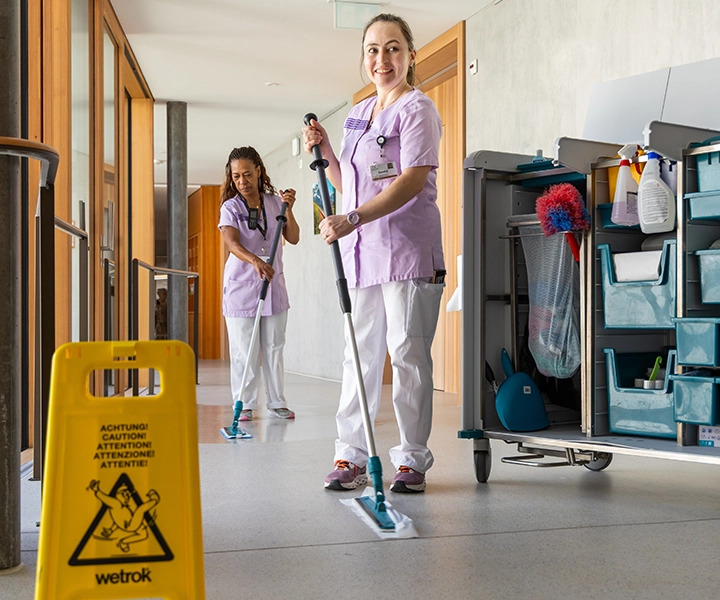
Adapting work equipment, such as the trolleys used by the housekeeping teams, to reduce back pain and other physical strain.
Better safeguarding break times, in particular by limiting interruptions and telephone calls, to encourage genuine recovery during the working day.
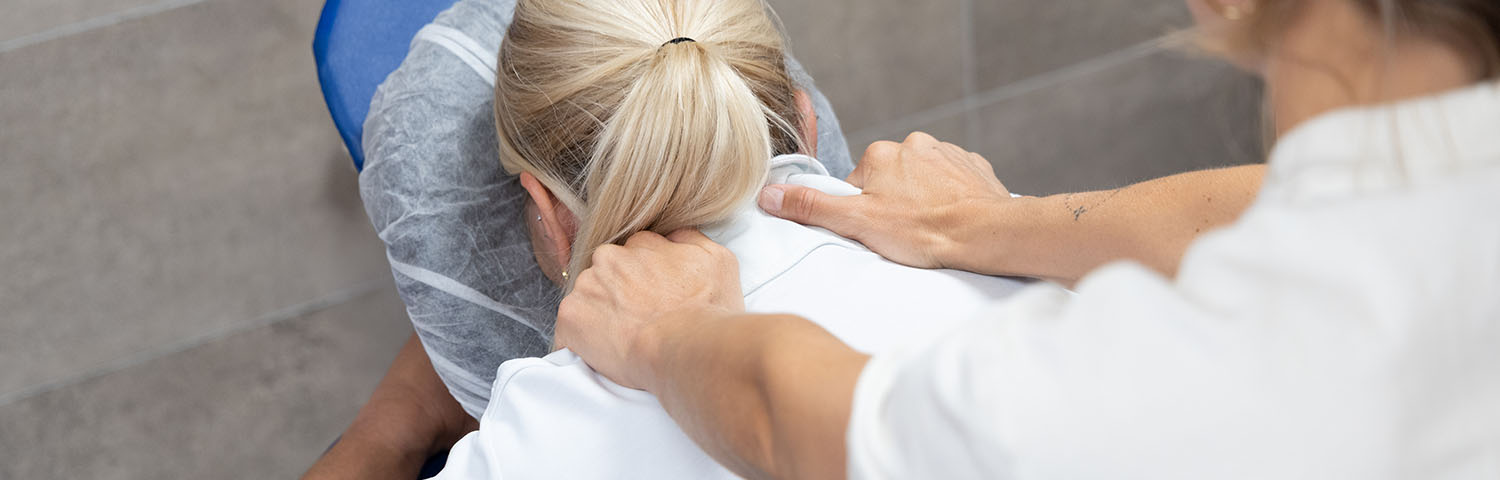
Offer short seated massage sessions during working hours to ensure a moment of relaxation and reduce muscle tension.
Strengthen preventative training for nursing staff, particularly on patient handling, managing emotions, conflicts and challenging interpersonal situations.
Taken individually, these measures may seem modest, yet they are strategic. They demonstrate to teams that their day-to-day work on the front line is taken seriously and can lead to tangible improvements. The ability to act swiftly on specific issues builds buy-in for a robust corporate health and safety approach.
“These simple measures, implemented in close collaboration with Human Resources, have quickly helped to improve the comfort, safety and quality of life of our staff. From now on, every staff member receives training as soon as they take up their new duties, and every change is addressed with health considerations in mind.”
Julien Ethenoz, Health and Safety and Projects Officer at La Rozavère Foundation.
“This project has confirmed that by starting at the grassroots level, it is possible to identify simple, practical and inspiring levers for action. The commitment of La Rozavère Foundation and its teams has been a key factor in the success of this initiative.”
Claire Bauduin, ergonomist and CorporateCare specialist at Groupe Mutuel.
How this approach is changing the HR function
For HR managers in nursing homes, the benefits of adopting such approaches go beyond well-being at work and enable the development of a comprehensive response to several major HR challenges: gaining a better understanding of the causes of absence, supporting managers, retaining staff, reducing the workload on existing teams and enhancing the organisation’s appeal.
Work-Life Balance (WLB) initiatives also foster a shared dialogue between senior management, HR, managers and staff. Rather than treating absenteeism solely as a figure to be reduced, the organisation can view it as a sign that a balance needs to be restored between job demands, available resources and working conditions.
How can you launch a similar CHM initiative in your own nursing home?
Reducing absenteeism is most effective when the processes follow a clear progression. For a nursing home, these five steps can serve as a starting point:
Analyse the available data: rates and types of absence, departments affected, seasonality, average duration and frequency.
Listen to staff: through surveys, interviews, on-the-job observations or workshops to understand the constraints they face.
Identify actionable causes: work organisation, physical or emotional workload, communication, management, equipment.
Prioritise a few concrete measures: focus on actions that are visible, realistic and suited to staff’s day-to-day work.
Measure and then adjust: monitor indicators, gather feedback and gradually adapt the action plan.
This step-by-step approach avoids two common pitfalls: simply stopping at the observation stage and implementing too many actions simultaneously. Instead, it enables the creation of a credible, measurable and universally understandable process. This delivers real added value for staff and, consequently, for the performance of the entire organisation.
Groupe Mutuel’s CorporateCare support to reduce absenteeism
With its team of CorporateCare specialists, Groupe Mutuel supports companies and organisations in implementing a structured and integrated health management system that combines health promotion, risk prevention and absence management. Its specialists analyse the situation, recommend appropriate measures and support their sustainable implementation.
In the specific context of nursing homes, this support helps to address human, organisational and economic challenges:
safeguarding staff health
reducing avoidable absences
supporting managers
and strengthening the nursing home’s ability to fulfil its mission towards residents.